Cluster Resource Gauges
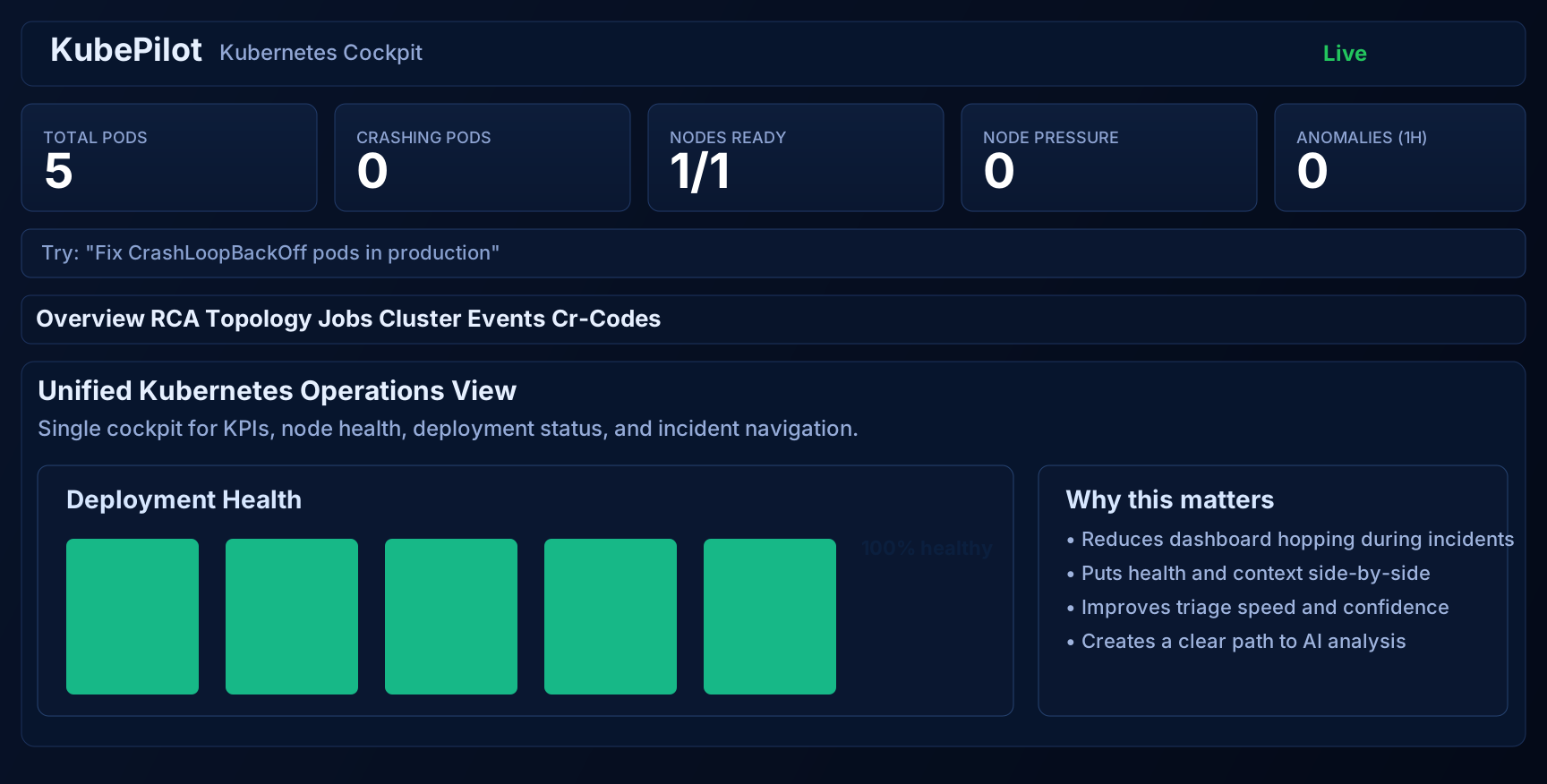
Live CPU, memory, and storage usage with per-StorageClass breakdown. Longhorn-aware for accurate physical disk readings, not just bound PVC totals.
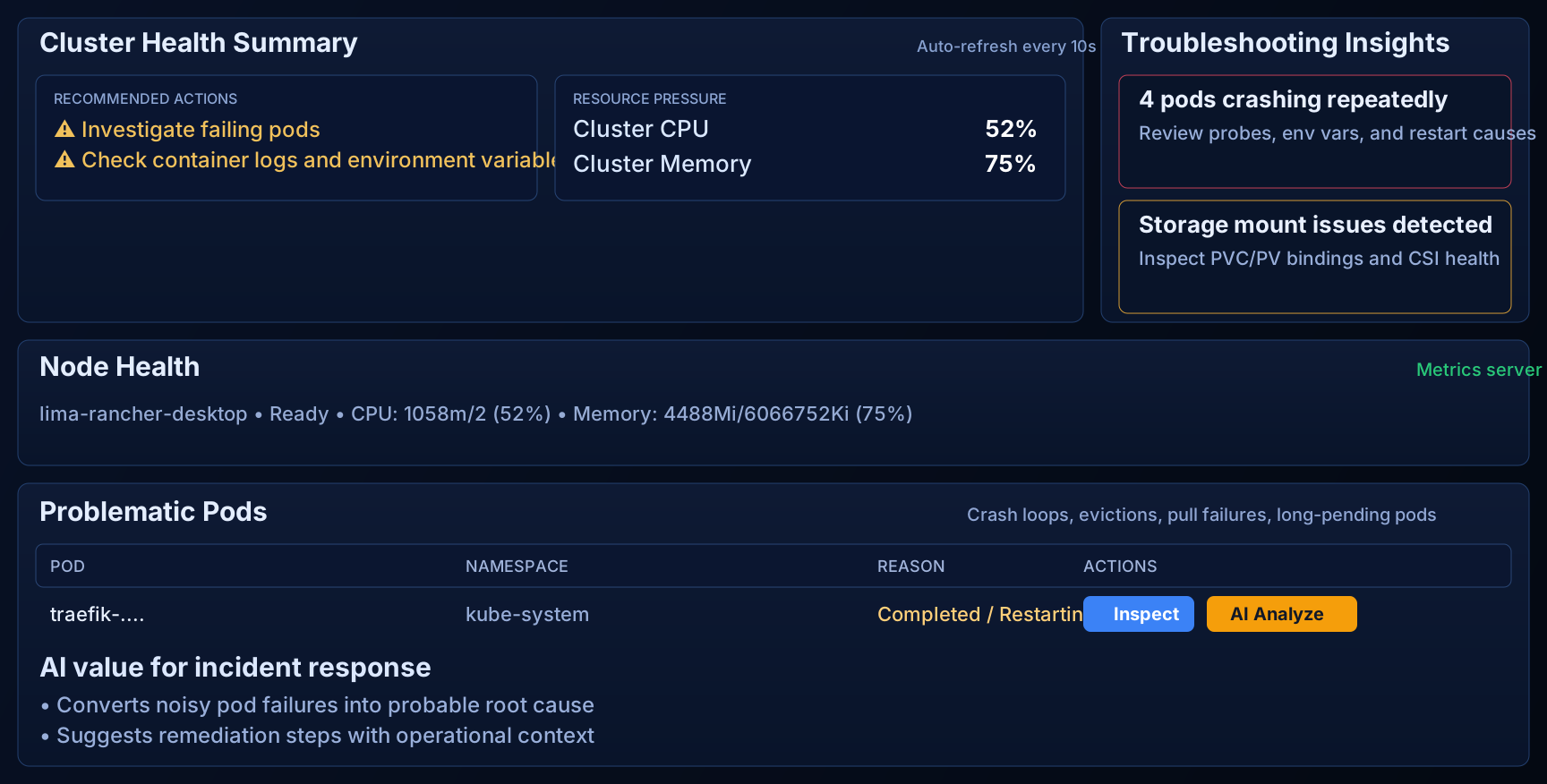
A troubleshooting cockpit for cluster health, pod diagnostics, logs, events, service topology, node LAN/WAN visibility, and AI-driven root-cause analysis. Resolve incidents from the web dashboard or the native iOS companion.
Watch a quick walkthrough of installing a Kubernetes dashboard, connecting to a cluster, and navigating workloads from the UI.
Placeholder demo video: Kubernetes Dashboard installation and access. Replace this embed with your own KubePilot walkthrough when ready.
To swap the video later, edit docs/landing/index.html and change the YouTube ID in the iframe
src (currently 8J2lN2EJ_Jo).
Continuous anomaly detection with automated RCA, evidence chains, and remediation steps from local LLMs
7 opinionated diagnostic workflows out of the box, plus custom YAML runbooks with live hot-reload
Cluster-wide CPU, memory, and real disk usage (Longhorn-aware) updated every 15 seconds
Visual map from Ingress to Service to Workload to Pod, with health and dependency edges
SwiftUI mobile app for alerts, pods, logs, RCA, Face ID, widgets, and Siri shortcuts
See real LAN, WAN, and WireGuard tunnel addresses instead of only the k3s overlay IP
Dry-run or active self-healing with confidence floors, rate limits, cooldowns, and kill switch
Fast pod log access, cluster event timelines, anomaly detection, and RCA drill-downs
A practical incident workflow that blends observability with AI-powered recommendations.
Live CPU, memory, and storage usage with per-StorageClass breakdown. Longhorn-aware for accurate physical disk readings, not just bound PVC totals.
A SwiftUI mobile app connects to the same KubePilot APIs for health cards, pod search, pod detail tabs, live logs, events, RCA reports, Face ID, widgets, and Siri/App Intents.
Continuous watcher detects CrashLoopBackOff, OOM, ImagePull and node-pressure anomalies, runs RCA through your local LLM, and stores reports with evidence chains.
Policy-gated remediation can run in off, dry-run, or active mode. Confidence floors, namespace blocklists, action allow-lists, cooldowns, hourly caps, and a pause kill switch keep automation auditable.
7 pre-built diagnostic workflows ship in the box. Drop YAML runbooks into a directory for fsnotify-driven hot reload — user runbooks override builtins by ID.
Browse Deployments, StatefulSets, DaemonSets, Jobs, Services, Ingresses, ConfigMaps, Secrets, and PVCs across all namespaces with live YAML and log viewers.
Node views classify private LAN/VPC addresses, public WAN addresses, and WireGuard or flannel tunnel endpoints using Kubernetes addresses plus k3s and flannel annotations.
Open a pod to inspect overview, containers, events, logs, sanitized YAML, metrics context, restart counts, uptime, and AI analysis without jumping between kubectl commands.
Open a tunnel into the cluster directly from the UI and reach the forwarded port through the dashboard reverse-proxy. Sessions are listed, cancellable, and auditable.
Optional embedded SQLite store persists RCA reports and anomalies across restarts. Configurable retention, WAL journaling, no CGO — same single binary.
Review warnings, normal events, anomalies, and RCA reports as a searchable operational timeline. Slack notifications can post formatted incident cards for high-severity findings.
ArgoCD-style canvas links Ingress to Service to Workload to Pod with status colours, ports, and external IPs. Switch namespaces without leaving the page.
Ask operational questions like "why are pods restarting?" or "summarise cluster health". The AI health chip shows Ollama connectivity before an incident analysis depends on it.
Upload kubeconfigs, switch contexts, and route every dashboard query to the new cluster — no restart required.
Optional auth, read-only defaults, mutation gates, CR-code approval for risky actions, and CORS policies. Safe for production from day one.
Built-in MCP server for multi-cluster agent orchestration, remote AI coordination, and programmatic access.
A clear workflow that reduces mean-time-to-resolution.
Use web, iOS, widgets, or alerts to identify warnings, resource pressure, not-ready nodes, and failing pods at a glance.
Drill into a problematic pod to view logs, event history, YAML, uptime, container state, restart reasons, and node LAN/WAN/tunnel details.
Run AI Analyze or ask the assistant for root cause, evidence, confidence, risk, commands, YAML fixes, and next steps.
Validate impact through topology and health views, then use runbooks, gated actions, or Autopilot dry-run/active modes when policy allows.
The KubePilot dashboard and native app keep incident context in one place.
Choose the installation method that fits your workflow.
git clone https://github.com/bwalia/kubepilot.git
cd kubepilot
make dashboard-install && make dashboard && make build
KUBEPILOT_KUBECONFIG="$HOME/.kube/config" ./dist/kubepilot serve --dashboard-port=8383
helm upgrade --install kubepilot charts/kubepilot \
-n kubepilot --create-namespace
# Access via port-forward
kubectl port-forward svc/kubepilot -n kubepilot 8080:8080docker run --rm -p 8383:8383 -p 9090:9090 \
-v "$HOME/.kube:/root/.kube:ro" \
ghcr.io/kubepilot/kubepilot:latest \
serve --dashboard-port=8383cd ios
brew install xcodegen
./generate.sh
open KubePilot.xcodeproj
# Connect the app to your running KubePilot server:
# http://<your-mac-or-server-ip>:8383KubePilot is free, open source, and built for teams that want AI-assisted incident response across web, mobile, runbooks, and safe automation without vendor lock-in.